Trade War
Newsletter 296 - March 15, 2026
Welcome to the 296th edition of Trade War.
Even as Tehran attacks tankers, Iranian oil continues to transit the Strait of Hormuz bound for China. Beijing moves to a full ban on the export of refined petroleum products to ensure adequate resources at home. And China diversifies away from the Middle East, sourcing energy from countries including Russia and Brazil.
Chinese imports of crude surge 16% in first two months contributing to 1.2 billion gallons in reserves, world’s largest. And China continues to rapidly expand into renewables, targeting a goal of 25% of its energy mix by 2030, up from 21.7% now.
The National People’s Congress closes as delegates approve 15th Five-Year Plan emphasizing self-reliance in capital-intensive advanced tech. And China faces skeptics as it claims it will “actively harness” AI to create new jobs and for “empowering” traditional employment.
Notable/In depth ~
Atlantic Council event: Kurt Campbell to speak on Trump’s upcoming China visit
In bid for assimilation, law mandates ethnic minorities study in Mandarin
Taiwanese would resist a Chinese invasion even without US support, says survey
China weathers the Iran war energy crisis
How is China, the world’s largest oil importer, faring as the Iran war intensifies?
Probably better than you think. China’s taken a number of steps, some recent, some going back years, that have prepared them for this moment.
While last week, China’s National Development and Reform Commission (NDRC) had already started to limit exports of refined oil and natural gas to ensure there were adequate stocks at home, this week it instituted an outright ban, reported Reuters citing sources.
China not only buys oil and gas from the world, it also has significant domestic reserves and is the third largest exporter of petroleum products in the region.
Strait of Hormuz shipments shutdown
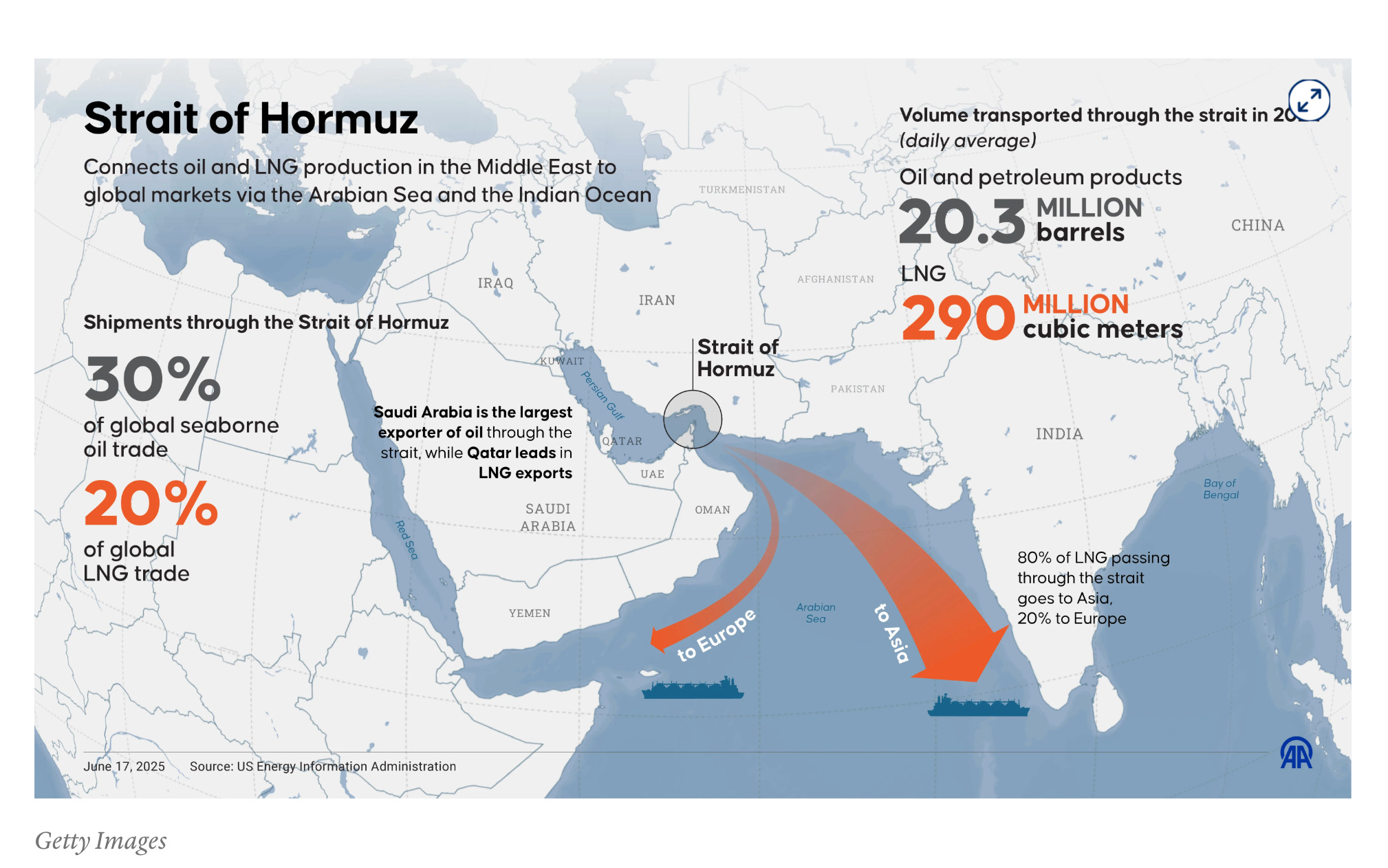
The Iran war energy drama has focused on the key role of the Strait of Hormuz, through which flows 30 percent of the world’s seaborne oil trade and 20 percent of its natural gas.
That’s been put in jeopardy as Iran has shut down most shipments through the Strait, attacking 15 ships, with seven seafarers killed and some 20,000 stranded (video).
That’s causing huge headaches for countries around the world including the U.S. and has raised the ire of the White House.
“Show some guts” and push through the channel, Trump recently said on Fox News, referring to the many ships stranded near the Strait. “There’s nothing to be afraid of. They have no Navy. We sunk all [Iran’s] ships,” he said.
There have been more attacks on vessels since Trump’s comments. And not surprisingly, the ship captains seem to be taking their cues from reality, rather than from officials in the White House who have begun promising to start providing U.S. naval escorts.
But Iranian oil to China still transiting Strait
Even as the attacks continue, Iran is ensuring that oil bound for China, its largest and most important energy partner, is making it through the Strait of Hormuz. In total, 11.7 million barrels of Iranian crude oil have passed through the Strait since the war began, all bound for China. That’s about 1.22 million barrels per day, half of what it was in February.
On March 14 New Delhi announced that Tehran had allowed two Indian-flagged ships carrying liquefied petroleum gas (LPG) to pass through the Strait.
China seeks new sources beyond Middle East
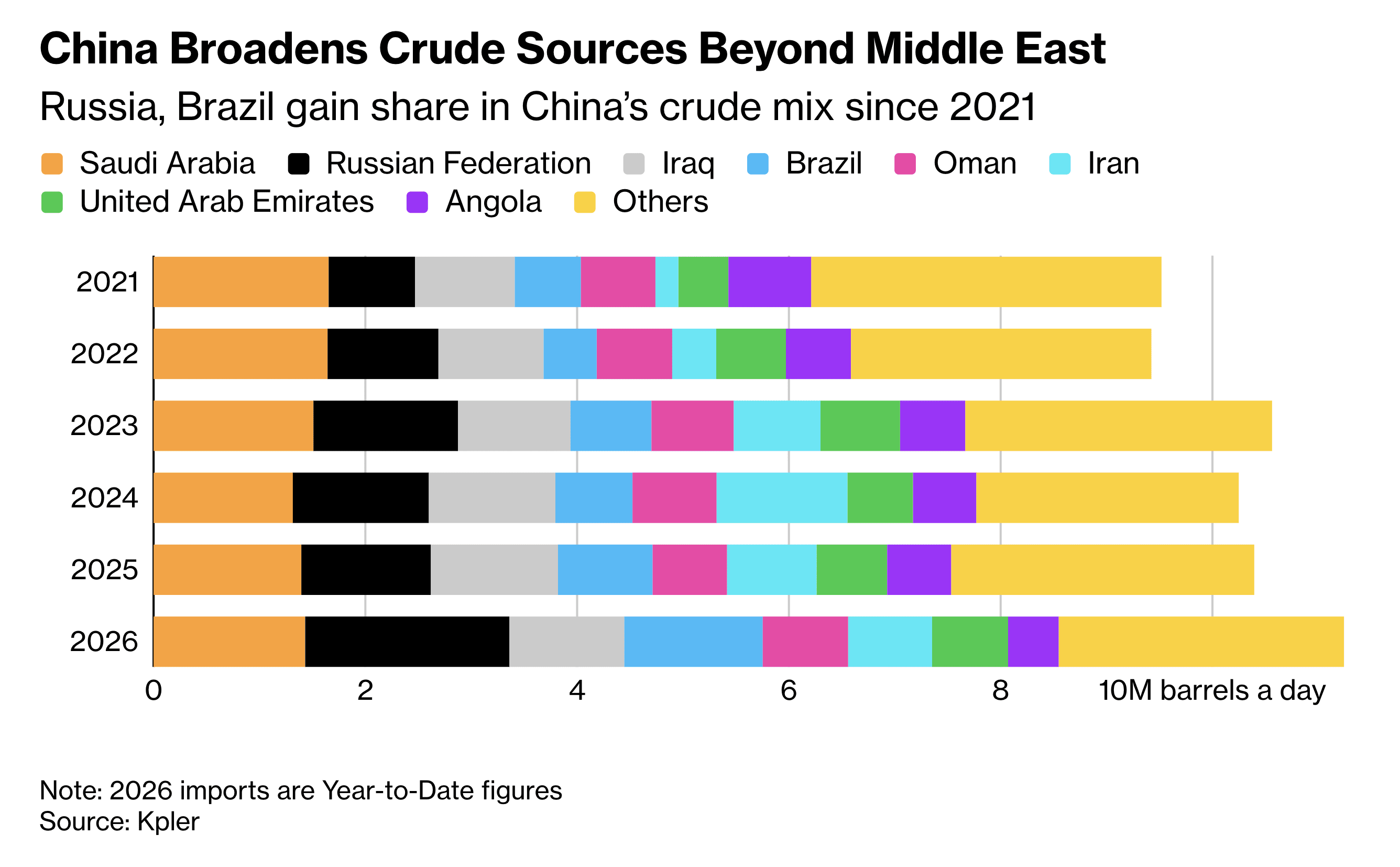
China isn’t just relying on oil from Iran and the rest of the Middle East, however. Instead, China has been increasing domestic production and buying more from other countries around the world including Russia and Brazil.
“While nearly half its crude still originates in the Middle East, China sources oil from almost every continent. Its firms hold stakes in projects in more than a dozen countries, from South America to the North Sea, spreading the risk beyond any single region,” reports Bloomberg News.
“Domestic output, meanwhile, has climbed to a record, as state-owned firms work to limit the vulnerability that comes with being the world’s largest importer of oil.”
World’s largest reserves at 1.2 billion barrels
China has been stockpiling reserves too. In the first two months of this year, crude oil imports surged by 16 percent.
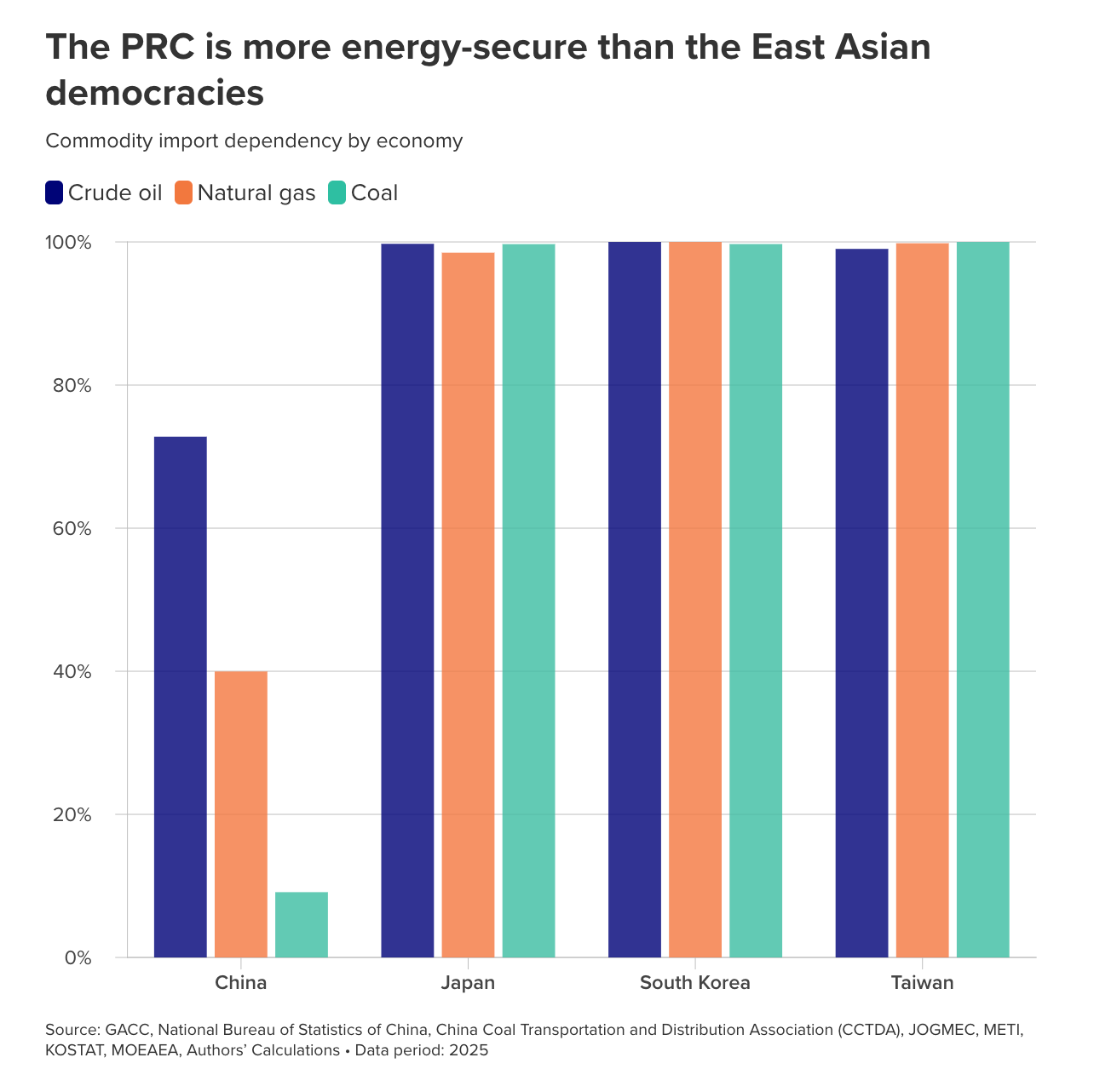
China now has a massive oil reserve estimated at 1.2 to 1.3 billion barrels of crude, the world’s largest. That’s enough for the country to get by for three to four months, estimates the Atlantic Council Global Energy Center.
“The PRC’s existing inventories leave it relatively well positioned to weather an oil crisis, at least compared to its regional rivals,” writes the Global Energy Center.
Moving beyond petroleum
And China has been dramatically diversifying its energy base away from petroleum for years now.
It has some of the world’s largest coal reserves, which it continues to use. It has the world’s largest supply bases for producing solar panels and wind turbines. And it has rich hydrological resources and a fast-growing nuclear power industry.
China too has been moving aggressively to rely more on electricity rather than oil and has created the world's largest energy grid.
Most notably, China now has the world’s largest manufacturing base and world’s largest market for electric vehicles (and is exporting EVs around the world.)
By 2030, China plans to grow the share of non-fossil fuels in its energy mix to 25 percent, up from 21.7 percent in 2025.
China no doubt wants an end to the severe economic disruptions caused by the Iran war, as much as do other countries. But there’s a difference:
Keep reading with a 7-day free trial
Subscribe to Trade War to keep reading this post and get 7 days of free access to the full post archives.