Trade War
Newsletter 299 - April 5, 2026
Welcome to the 299th edition of Trade War.
China and Pakistan announce five-point plan to end Middle East War. Beijing still feels insulated from oil shock. And Chinese officials increasingly believes US is losing control over situation in Iran.
Beijing will demand Taiwan concessions in exchange for business deals, when Trump visits China. And Chinese officials are blocking Bahrain resolution to reopen Strait of Hormuz over opposition to military action.
US hasn’t come to terms with the fact that the “era of unipolarity has long gone,” says Xinhua commentary. And as a vicious price war continues in the electric vehicle market, BYD announces its first fall in profits in four years.
Notable/In depth ~
“US-China Relations: Problems and Prospects” - new class in April taught by me
Latest Xi doctrine on the economy: ‘high quality’ development
Montana’s China Town Hall features Goldman Sachs David Willard
China’s mood one month into Iran War
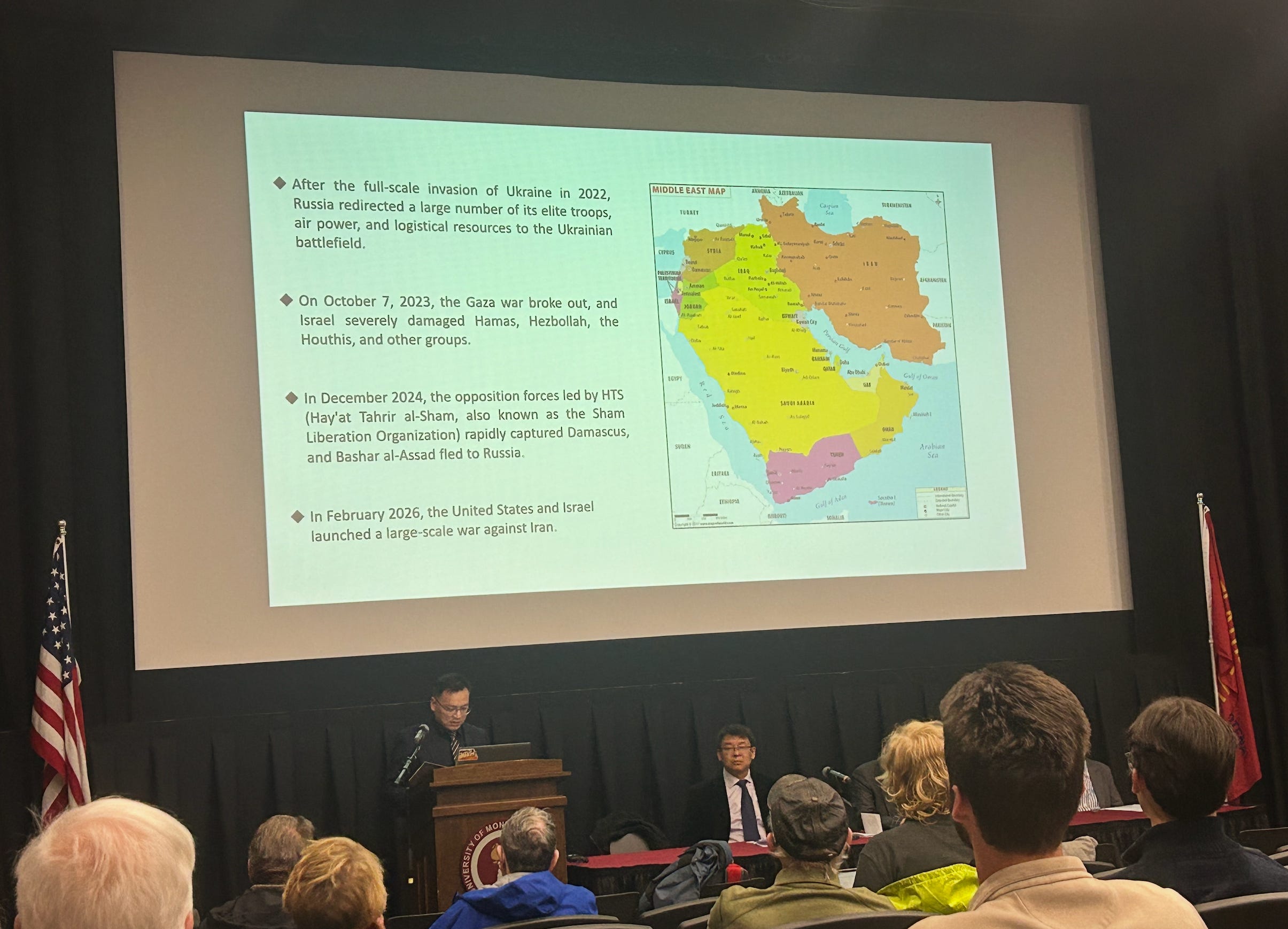
How does Beijing feel a little over one month into the Iran War? I got a better feel for that when four Chinese experts from the Shanghai International Studies University visited Missoula, Montana, for a conference earlier this week.
First of all, China is still not that worried about the Iran War. China also sees the Middle East crisis as an opportunity for it to further cement its reputation as a global superpower, and a peace-loving one in contrast to the warmongering U.S.
Five-point peace plan
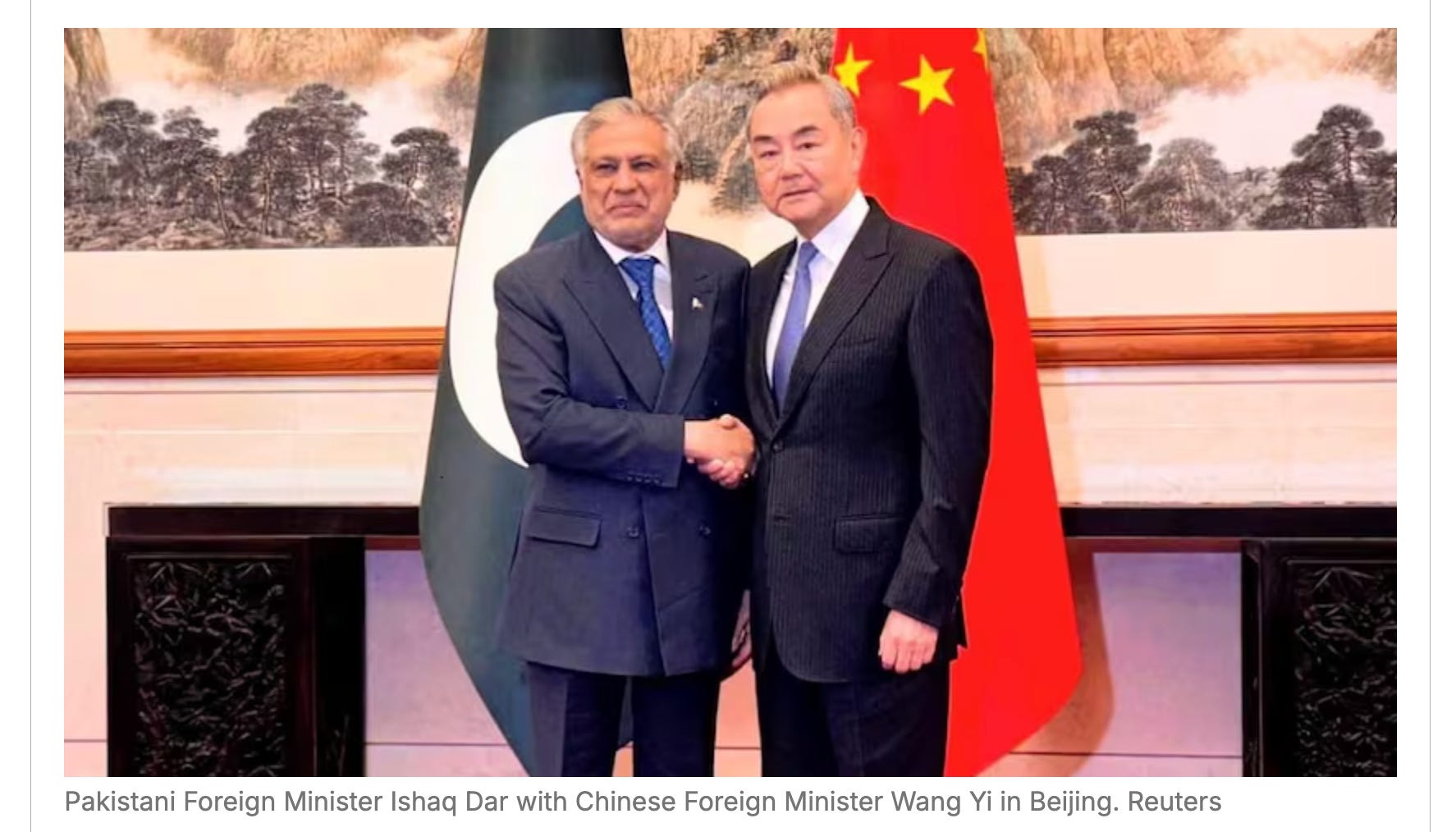
The effort to burnish its international standing was behind China’s decision earlier this week to announce a five-point plan for ending the war, when Pakistan’s foreign minister met with Chinese foreign minister Wang Yi, in Beijing. The plan includes these five initiatives:
Immediate ceasefire
Peace talks
End to attacks on non-military targets like power plants
Reopening the Strait of Hormuz to commercial shipping
Respect for the UN Charter
But don’t expect these initiatives will be implemented soon as Iran doesn’t have a lot of motivation to see that happen.
China is no stranger to multi-point plans for the Middle East. Along with brokering the peace agreement between Iran and Saudi Arabia in 2023, there have been at least seven other agreements announced by Beijing since 2013. And needless to say, none of them have led to lasting peace in the Middle East.
(Credit to the very good China-MENA Newsletter from Atlantic Council colleague Jonathan Fulton for these figures on Chinese peace plans.)
Buying more oil from Indonesia and Brazil
China isn’t deeply worried about the war at this point.
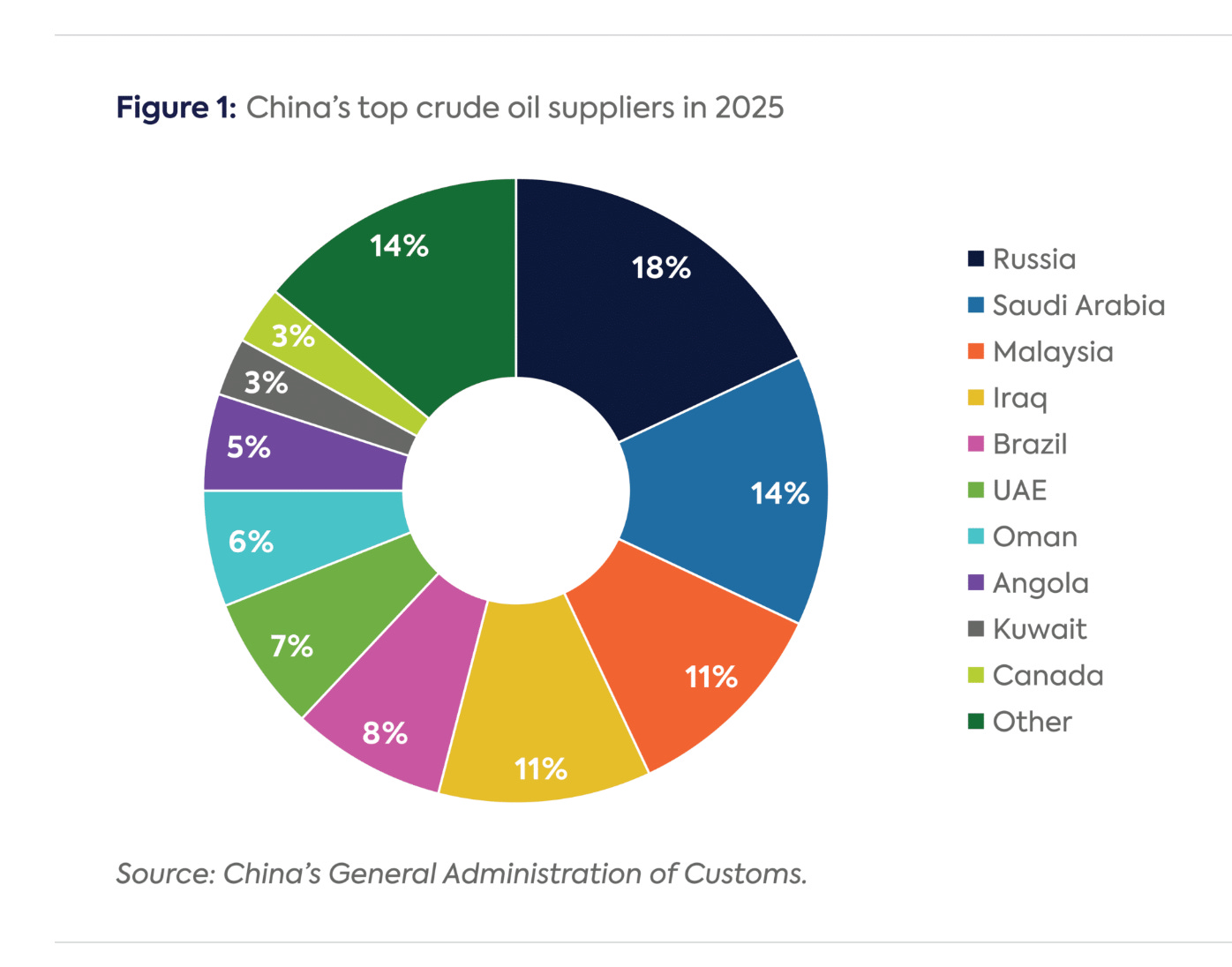
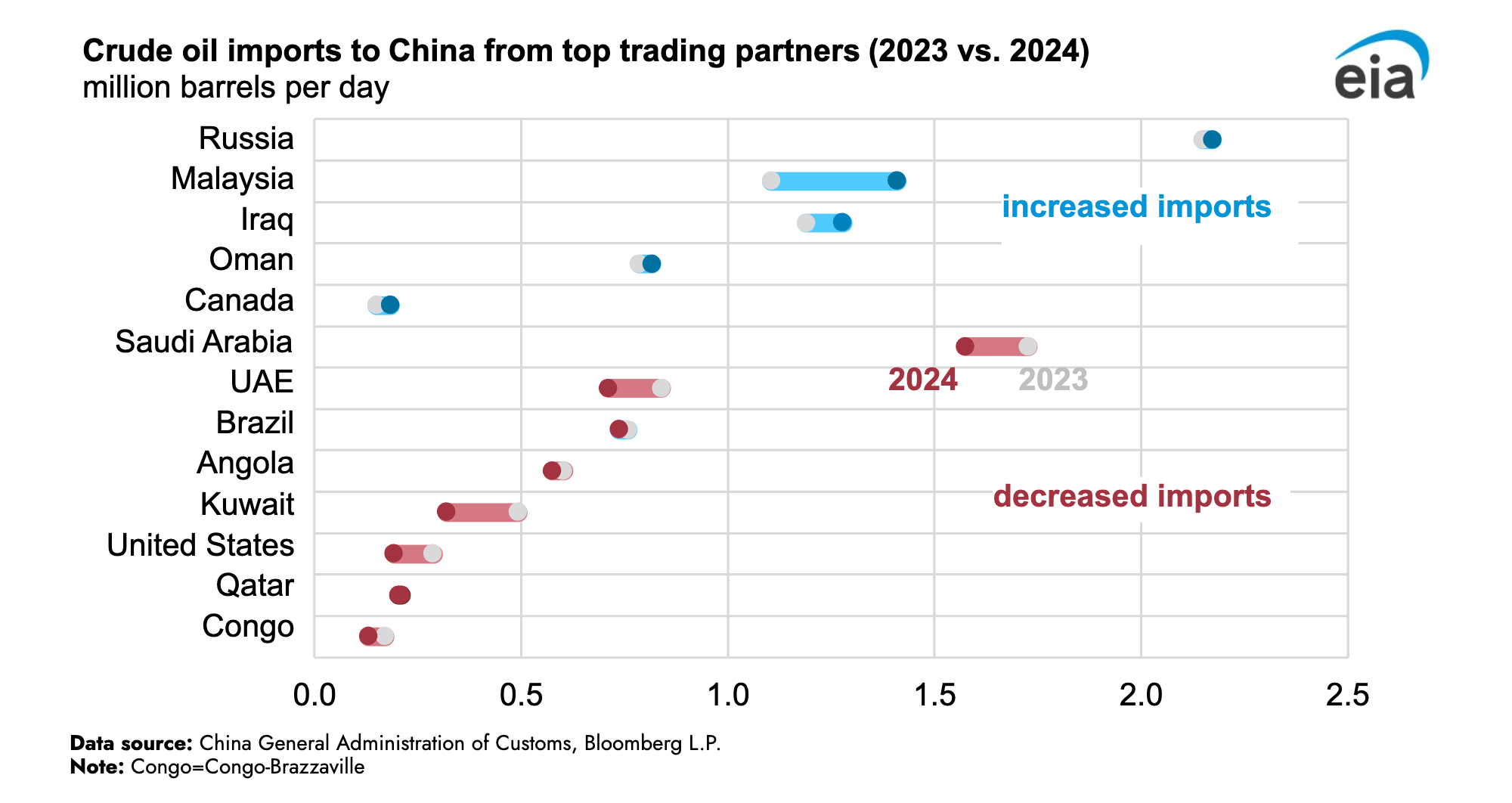
It has the world’s largest strategic oil reserves. It has diversified to providers of oil beyond the Middle East, by buying more from countries like Indonesia and Brazil.
China has also made remarkable progress in moving towards an economy less reliant on oil and and is close to meeting its goal of seeing 25% of its economy powered by renewables by 2030.
“The spillover from Middle East tensions should be more manageable for China compared with many other countries. Its diversified energy mix—including coal‑heavy supplies, rapid renewable-energy expansion, and rising electrification supported by domestic generation—helps cushion the impact of higher global energy prices. Inflation is already minimal,” writes Grant Feng, a senior economist at Vanguard.
China’s Middle East strategy extends far beyond petroleum
Keep in mind that as the world’s largest crude importer, China has energy relations with a lot of other countries in the Middle East beyond Iran, including Saudi Arabia, Kuwait, Iraq, Oman and the UAE.
Equally importantly, China’s Middle East footprint extends far beyond energy, and includes significant investment in infrastructure and technology projects and extensive diplomatic ties.
“China sees the region as a whole. It’s not just focused on its relationship with Iran by any means at all” Dexter Roberts, a nonresident senior fellow at the Atlantic Council’s Global China Hub, said in an interview with NBC Montana.
Economic primacy without security dominance
“For decades, external influence in the Middle East rested largely on military presence, defense partnerships, and security guarantees, with the U.S. building a regional architecture centered on forward deployment, arms sales, and alliance relationships. China has instead pursued economic primacy without security dominance. Its influence stems from its role as the region’s largest trading partner, a major energy consumer, a leading infrastructure financier, and an expanding actor in digital and industrial ecosystems,” writes John Calabrese, a senior fellow at the Washington, DC-based Middle East Institute.
“China’s approach also lowers the political costs of overt geopolitical alignment. Many Middle Eastern governments, seeking to diversify partnerships, view Chinese economic engagement as compatible with their hedging strategies. Beijing’s focus on infrastructure, trade, and industrial cooperation enables regional states to deepen ties with China without formally altering their security alignments.”
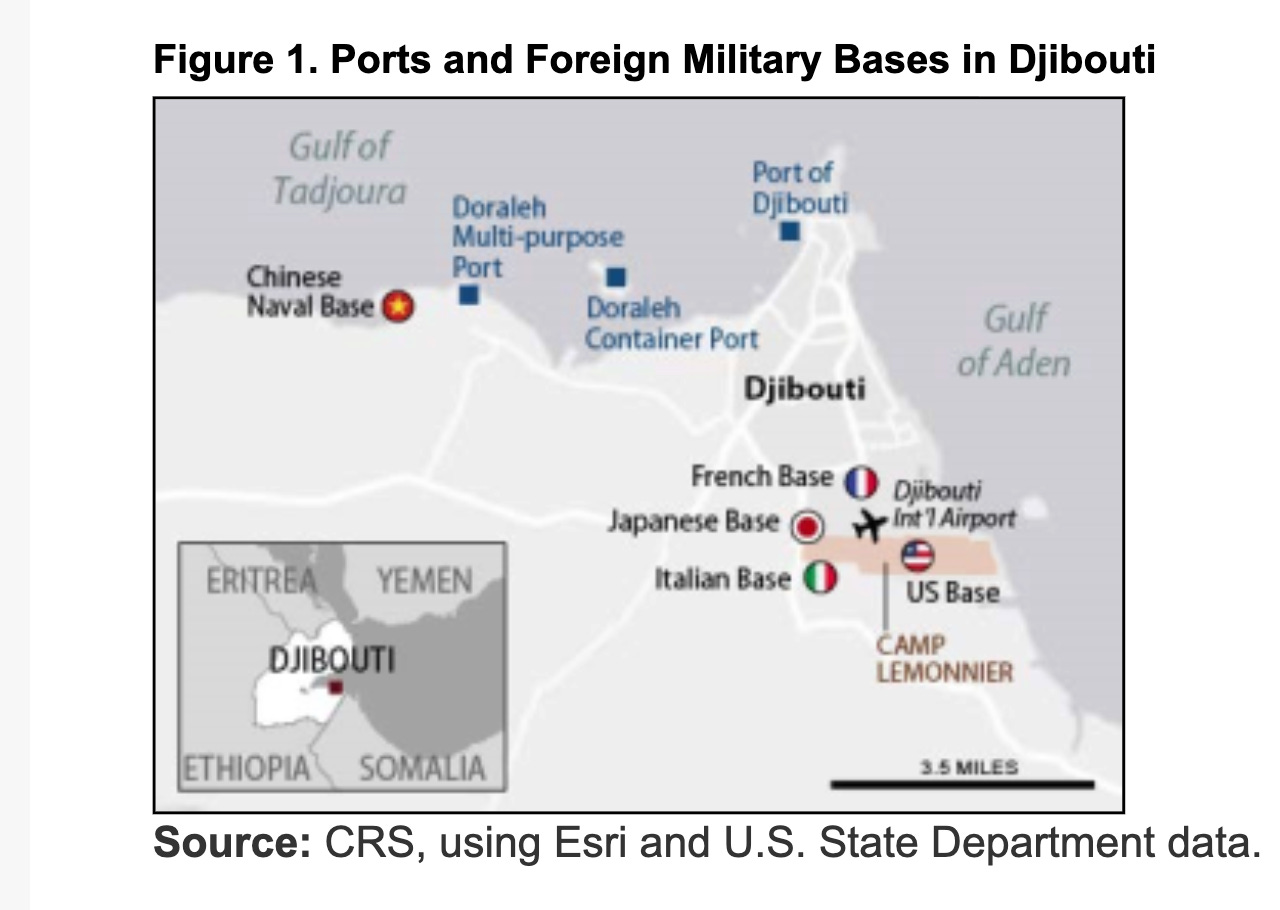
Of course, China has a military base in Djibouti, which to date has focused on anti-piracy and peace-keeping.
Beijing believes Trump’s hand compromised
China believes that Trump’s hand in the war is badly compromised. As one of the visiting scholars from Shanghai said to me—Professor Wen Shaobiao, an expert on China’s foreign policy and America’s foreign policy in the Middle East—Trump no longer has the ability to end the war on his own terms.
Instead, Iran holds most of the cards including over when ships will once again be able to safely transit the Strait of Hormuz and what shape the final resolution of the war will take. The U.S. will have to eventually face that reality, Wen said.
Also front and center in Beijing’s thinking is the midterm elections, according to Wen. Chinese officials believe the upcoming election ties Trump’s hands further and makes the White House even more likely to try to placate Beijing, in part to get China’s help in resolving the Iran War.
This will weaken Trump’s bargaining power when he comes to Beijing and sits down for negotiations with Xi Jinping, now scheduled for mid-May. Chinese officials know how much it matters to Trump that he can declare the summit a victory, and also recognize how he views winning business deals as a mark of success, including Chinese purchases of Boeing aircraft, agricultural products, and energy and gas.
Deals in exchange for US compromise on Taiwan
Beijing is now convinced it is in a position to demand a lot from the U.S. and is likely to issue political ultimatums related to Taiwan.
“China can give Trump money or deals. We expect Trump to make a statement opposing Taiwan independence, criticizing [Taiwan president] Lai Ching-te, and criticizing Japan’s support for Taiwan,” Wen told me over a steak dinner overlooking the Missoula valley, earlier this week.
Regardless of whether you believe China’s assessment is right or wrong, it’s important to know what the thinking is in Beijing and Shanghai as it’s likely to inform the actions of Chinese officials.
Beijing will almost certainly continue trying to use the Middle East crisis to cement its reputation as the more responsible global leader (a belief that has already gained significant traction in Global South countries.)
And while China will continue to call for peace, it’s unlikely to take real substantive action, and will avoid mobilizing its military or putting real pressure on Iran to curb its behavior.
Keep reading with a 7-day free trial
Subscribe to Trade War to keep reading this post and get 7 days of free access to the full post archives.